
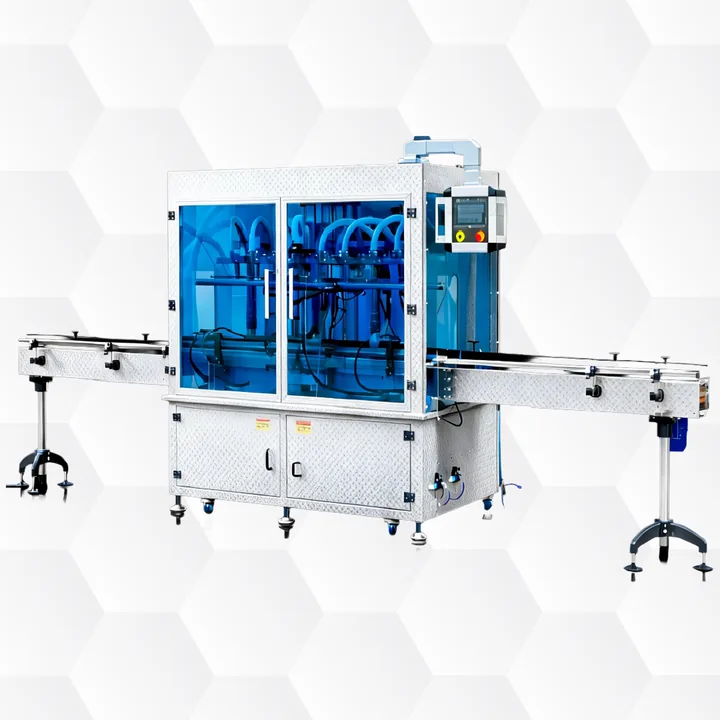
Bottle filling, capping and labelling machinery
Coordinate bottle handling, dosing, closure application, labelling and finished-pack transfer.
Plan the application before selecting equipment
Bottle projects involve several operations sharing the same container. Empty bottles must be presented and stabilised, product dosed without contaminating the neck or label panel, closures oriented and applied, labels and codes placed on a controlled surface, and finished bottles removed without tipping or scuffing.
Start with a matrix linking each product to its bottle, closure, label and checks. Height and diameter are not the only variables: base geometry, centre of gravity, sidewall flexibility, neck position, finish, transparency and supplier tolerance affect guides, sensors and transfers.
The machinery route depends on campaign length and tasks that remain manual. Semi-automatic equipment can suit varied batches, while automatic feeding and conveyors reduce repetitive presentation for stable formats.
Information to prepare
- Production product and fill range
- All bottle formats including difficult variants
- Caps, pumps, triggers, droppers or corks
- Production label rolls and coding requirements
- Approved finished-bottle samples
- Required fill, torque, label and leak checks
- Current method and target automation
- Layout, line direction and utilities
Application decision matrix
Use the real product, pack and site conditions when completing the review.
| Process stage | Selection variables | Acceptance evidence |
|---|---|---|
| Bottle infeed | Orientation, stability, spacing, neck position and cleanliness. | Representative bottles through guides and sensors. |
| Filling | Flow, foaming, particulates, nozzle position, drip and fill check. | Measured samples in defined product condition. |
| Capping | Closure orientation, engagement, bottle support and tightening. | Approved bottle/cap set and customer check. |
| Labelling and coding | Panel shape, surface, label web, code area and readability. | Production labels and accepted samples. |
| Transfer | Working heights, gaps, speed changes, back pressure and reject route. | Controlled stop and restart. |
| Changeover | Guides, nozzles, tools, feeders, labels and recipes. | Format sheet and accepted first bottles. |
Keep the neck and label panel clean
Nozzle shut-off, fill height, support and transfer time affect capping and labelling. Product on threads can alter closure performance; product on the sidewall can cause label lift.
Choose closure handling from the actual cap
Screw caps, pumps, triggers, droppers, crown caps, ROPP closures and corks need different presentation and application. Use normal production samples.
Plan controlled stops and restarts
A downstream pause should not leave open bottles under a nozzle or uncapped product exposed. Define stop state, clearing and restart across the line.
Related planning routes
- Filling machinery — Choose the dosing principle.
- Capping machinery — Choose closure handling.
- Labelling machinery — Choose the label method.
- Rinsing and feeding — Plan empty-bottle presentation.
Buyer questions
Practical points to settle before machinery is selected
Can one line run different bottle shapes?
Possibly, but guides, sensors, change parts, closure tooling and label geometry need review for every combination.
Should labels be supplied for a trial?
Yes. Label material, backing, roll direction, spacing, transparency and adhesive behaviour affect setup.
When is an unscrambler required?
When manual loading is a constraint and bottles can be oriented reliably. Shape, stiffness and finish determine the approach.
Can the line be bought in stages?
Yes where layout and interfaces allow it. Reserve compatible heights, conveyor space, signals and access.
Prepare a machinery enquiry
Send the product, pack formats, current method, target result and site information so Lancing can review the most suitable next step.
Send project detailsKeep one bottle reference through every trial stage
Assign each product and bottle combination a reference that follows the fill, cap and label assessments. Retain a finished-pack example alongside the component samples. This makes it easier to see whether a change at one stage affects the next, such as a filling adjustment changing neck cleanliness or a closure position changing label clearance.
Review a complete format change, not only individual machine settings. Include the point where old bottles, caps and labels are cleared and where the first finished bottle is approved. Ask the proposed line scope to identify who coordinates that sequence across the machines.
- Shared samples
- Use the same approved bottle and closure references in filling, capping and labelling records.
- Finished acceptance
- Define the combined pack checks after the bottle has completed the whole route.
Can separate successful machine trials establish complete-line performance?
They provide useful evidence, but transfers, controls and the finished-pack sequence also need assessment as a connected process.