
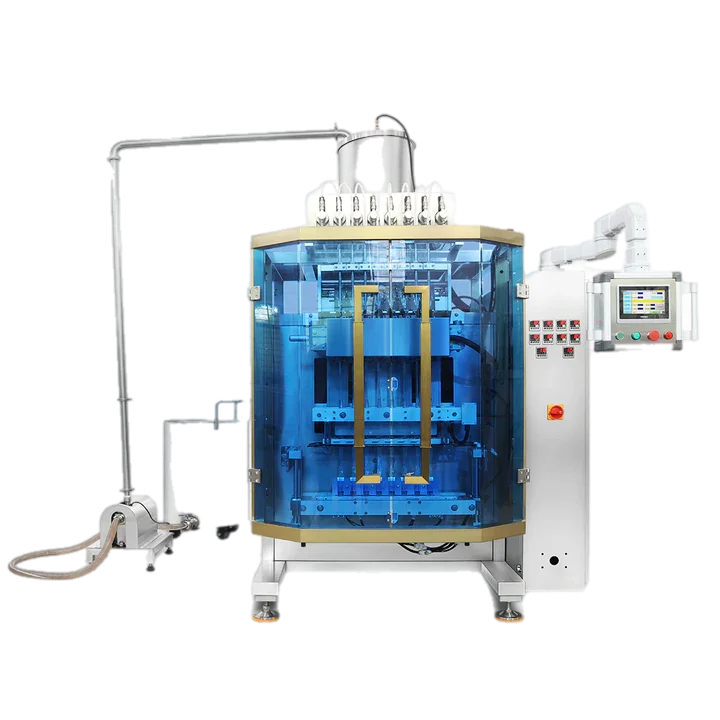
Sealing & Packing

Sealing and packing equipment including case tapers, induction sealing, foil sealing, band sealers, skin and blister packing, blow moulding and cartonizing.

Sealing and packing selection

Protect the product and prepare it for handling or dispatch

Selecting sealing and packing machinery

Sealing and packing equipment should be chosen around the pack material, seal area, product sensitivity, operator access and the way finished packs leave the line. Induction sealing, foil sealing, band sealing, vacuum sealing, case taping and other packing operations all have different sample requirements and suitability limits.

For foil or induction sealing, the cap, liner, container material and filled product should be checked together. For bags and pouches, film or laminate type, seal width, product contamination risk, air evacuation and downstream handling are important. For cartons or cases, pack size variation and tape or closure specification affect machine choice.

Review induction sealing, continuous band sealing, case tapers and shrinkwrapping machinery when planning end-of-line automation.

Test the real pack

Material, closure and product condition can change seal performance. Samples reduce the risk of specifying equipment from catalogue assumptions alone.

Common questions about sealing and packing machinery

Seal quality is created by the complete pack, material and process—not by temperature alone.

What causes a heat seal to leak?

A heat seal can leak because the seal area is contaminated, the material is incompatible, the temperature-pressure-time window is wrong, the jaws are damaged or misaligned, the pack is wrinkled, or cooling is insufficient. The failure should be classified before changing settings.

Diagnose sealing faults and leaks

Why does increasing temperature not always improve a seal?

Increasing temperature may distort the film, squeeze molten sealant from the interface, increase sticking or hide an underlying pressure and dwell problem. A stable seal window should be established with the actual material, product, machine speed and cooling conditions.

What pack samples are needed for a sealing trial?

Provide production film, pouches, lids or foil, filled packs or representative product, and examples of accepted and rejected seals where available. State storage, distribution and opening requirements so the acceptance method reflects the real pack.

When is induction sealing different from direct heat sealing?

Induction sealing heats a compatible foil liner through an electromagnetic field after the closure is applied, while direct heat sealing transfers heat through a sealing tool to the package material. The container, closure, liner and required barrier determine which process is relevant.

Review induction-sealing machinery