
Jar and tub filling, capping and sealing machinery
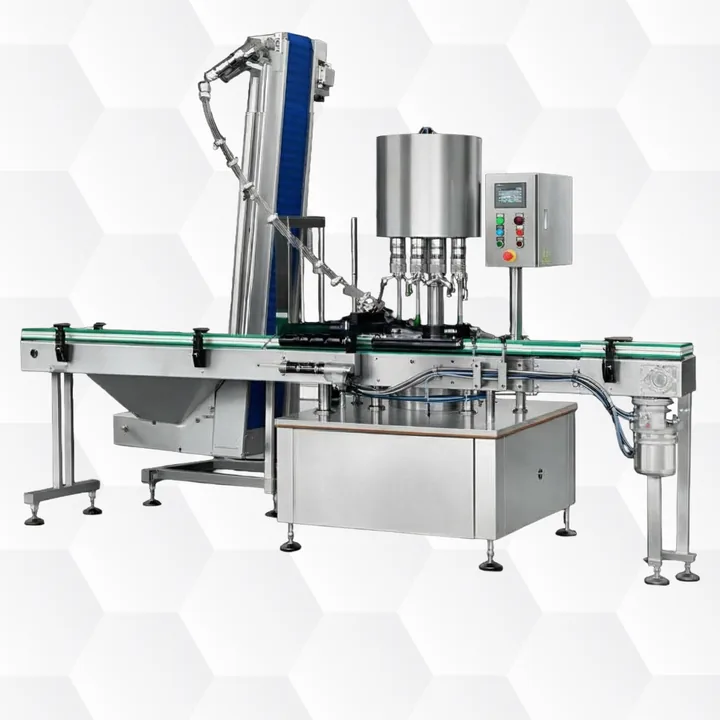
Coordinate wide-mouth filling, clean rims, lid or cap application, sealing and presentation.
Plan the application before selecting equipment
Jars, tubs, pots and cups can be easier to fill through a wide opening but more difficult through downstream sealing and closing. Product on the rim can prevent a lid, foil or induction liner from sealing correctly. Lightweight containers may distort under guides or top pressure.
The filling method should suit product and desired presentation. Pastes, creams, sauces, powders and granules can require different hopper, dosing and shut-off arrangements. Headspace and settling should be considered before lid or seal application.
Closure options include screw caps, press-on lids, snap lids, membranes, foils and induction liners. The route depends on how the component is supplied, oriented, placed and checked.
Information to prepare
- Product and fill range
- Jar, tub, pot or cup samples
- Cap, lid, membrane, foil or liner samples
- Rim cleanliness and headspace requirement
- Finished-pack seal or closure check
- Label, sleeve or coding specification
- Nest separation or pack feeding
- Outer-pack stability
Application decision matrix
Use the real product, pack and site conditions when completing the review.
| Process stage | Selection variables | Acceptance evidence |
|---|---|---|
| Container feeding | Nesting, taper, flexibility, rim, base stability and orientation. | Samples feeding without double release or distortion. |
| Filling | Flow, particulates, stringing, drip and rim cleanliness. | Accepted fill presentation and clean seal area. |
| Lid or cap placement | Orientation, stiffness, fit, height and support. | Correct seating without deformation. |
| Sealing | Material compatibility, contamination, pressure, heat or induction. | Customer-approved integrity check. |
| Labelling and coding | Taper, label area, condensation and code position. | Production labels and finished packs. |
| Outfeed | Pack stability, stacking, cooling and outer-pack loading. | Controlled transfer without lid movement or tipping. |
Protect the rim
Nozzle diameter, anti-drip method, cut-off and centring should be tested with the widest product range.
Confirm the complete material combination
Container, cap or lid, liner or foil and product can interact. Use approved production components and the customer’s integrity method.
Support flexible packs correctly
Side pressure, top load, guide rails and transfers can distort tubs. Tooling should support the pack at a suitable datum.
Related planning routes
- Paste filling — Review viscous dosing.
- Press-on capping — Review lids.
- Induction sealing — Review liners.
- Round labelling — Review side labels.
Buyer questions
Practical points to settle before machinery is selected
What is the key sample for a sealing trial?
The complete production combination: product, container, lid or cap, liner or foil, and the finished-seal test.
Can one machine apply screw caps and press lids?
Different principles and tooling are usually required; a shared line may be possible with change parts or separate stations.
How is product kept off the rim?
Product feed, nozzle geometry, cut-off, filling position, centring and product condition all matter.
Can tapered tubs be labelled?
Yes, but taper, label shape, application path and surface must be matched.
Prepare a machinery enquiry
Send the product, pack formats, current method, target result and site information so Lancing can review the most suitable next step.
Send project detailsApprove the container, fill and closure as one pack
For jars and tubs, retain examples of the intended finished fill presentation and the accepted closure condition. Show the required headspace and the surfaces that must remain clean before the lid, cap or seal is applied. Use those references when comparing dosing and closing arrangements.
Include the transition from closing to downstream handling. Describe whether the pack is immediately conveyed, labelled, stacked or loaded into an outer case. The assessment should check that the accepted closure and pack appearance remain satisfactory after that handling sequence.
- Rim reference
- Mark the surfaces involved in closure or sealing and the agreed contamination check.
- Pack support
- Review how the container is held during filling, closing and the first outfeed transfer.
Why send lids and liners with the container sample?
The full component combination is needed to assess placement, fit and the intended sealing or closure method, rather than selecting equipment from the jar dimensions alone.