Filling Machinery

Filling machinery for liquids, pastes, powders, carbonated products, ATEX environments and sachet or VFFS applications.

Filling machinery selection

Match the filling principle to the product and container

Choosing a filler for liquids, pastes, powders and granules

Filling machinery should be specified around product behaviour before the mechanical format is chosen. Free-flowing liquids, foaming products, viscous pastes, abrasive powders and fragile granules all behave differently in the hopper, transfer pipe, dosing system and nozzle. Container stability, neck size, headspace, drip control, cleaning access and product changeover also affect the final machine choice.

For liquid and paste projects, useful samples include the filled product, the container, the cap or closure and any target fill range. For powder or granule projects, Lancing will normally need details of flow behaviour, bulk density variation, dusting, bridging risk and whether the product can tolerate vibration or auger movement. For integrated lines, the filler should be considered alongside capping machinery, labelling machinery, conveyors and the available cleaning routine.

Where product characteristics are uncertain, a practical trial with samples is more reliable than choosing purely from photographs or nominal capacity. The liquid filling, paste filling and powder and granule filling pages give more focused selection guidance.

Specify the product first

Viscosity, temperature, solids, foaming, settling, dusting, abrasiveness and cleaning requirements should be understood before line speed or automation level is finalised.

Buyer questions

Practical answers before requesting a quotation

What information is needed to specify filling machinery?

The product, container, fill range, closure, cleaning method, changeover requirement, utilities, available space and current process all help Lancing recommend a suitable filling machine.

When is a product sample useful?

A product sample is useful when viscosity, foaming, dusting, settling, particulates or container handling could affect the filling principle or nozzle arrangement.

Filling technology decision matrix

Compare the dosing principle with product behaviour and pack presentation

Use the product and acceptance method to narrow the choice

The dosing principle should be selected around how the product moves, how it must be measured and what the filled pack must look like. The same nominal fill volume can require a different approach when the product foams, contains particles, changes viscosity with temperature, settles, creates dust or needs a consistent liquid level rather than a measured dose. Container rigidity, neck opening, headspace, drip control and cleaning access then determine the nozzle and handling arrangement.

Filling principleUseful starting applicationsPoints to verify with samples
Peristaltic pumpClean, pumpable liquids where a controlled product path and straightforward tubing change are useful.Tube compatibility, wear, suction lift, fill range, foaming and nozzle shut-off.
Piston or servo-pistonFree-flowing liquids through to thicker pastes where a positive-displacement dose is appropriate.Viscosity range, particulates, shear sensitivity, valve selection, hopper feed and cleaning access.
Gear or rotor pumpSmooth viscous products and applications that benefit from continuous, recipe-controlled transfer.Product slip, solids, heat generation, pipework losses, pump cleanability and drip control.
Vacuum or liquid-level fillingSuitable rigid containers where a consistent visual fill level is the primary requirement.Neck seal, container variation, returned product handling, foaming and product compatibility.
Auger fillingPowders that can be metered by controlled screw rotation.Bulk-density variation, flow, aeration, bridging, dust, refill consistency and cut-off behaviour.
Weigh or vibratory fillingGranules and free-flowing solids where net quantity is checked by weight.Piece size, fragility, settling, target tolerance, feed presentation and residual product at cut-off.
Isobaric fillingCarbonated or sparkling products that require pressure-controlled filling conditions.Product temperature, carbonation, container strength, neck finish, pressure control and downstream handling.

Separate the filling function from the rest of the line

Verified Lancing project documentation for an LU1800 application describes an isobaric filling-only module with controlled container gating and physical and optical sensing; rinsing, cap feeding, capping and downstream processes were scoped separately. That distinction is useful for any filling project: the dosing machine should have a clear functional boundary, while the infeed, discharge and following process are still reviewed as connected interfaces.

A useful trial should use production product at the intended operating temperature, representative containers and the planned fill presentation. Record start-up, steady running, pause and restart, low product level, changeover and cleaning observations. For a quotation, provide the product safety information, fill range, container neck and internal opening, batch pattern, replenishment method, cleaning routine and the next operation after filling. Review liquid filling, paste filling, powder and granule filling or carbonated filling for the relevant product family.

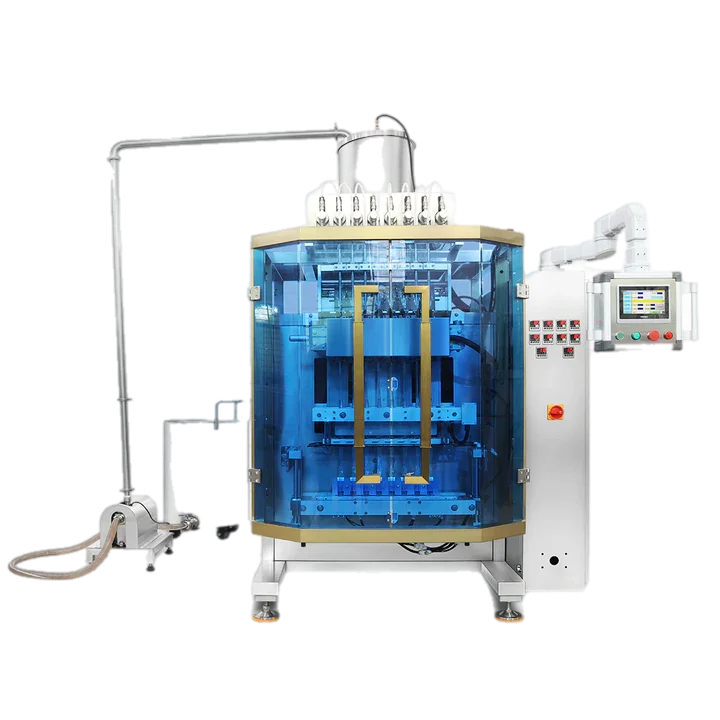
Common questions about filling machinery

Filling method selection depends on the product, dose, container and required checks.

What causes inconsistent fill quantity?

Inconsistent fill quantity can be caused by product condition, entrained air, changing head pressure, pump or valve behaviour, nozzle timing, container presentation, calibration method or measurement variation. Diagnose the system by holding the product, container and test method constant while changing one factor at a time.

Use the filling troubleshooting sequence

How does product foaming affect a filler?

Foaming can reduce the usable filling rate, obscure the true liquid level and contaminate the neck or label panel. The response may involve nozzle position, controlled flow stages, diving nozzles, product conditioning or a different filling principle; it must be assessed with the real product and container.

When is fill-by-weight useful?

Fill-by-weight is useful when net mass is the required control variable or when product density and container tare are managed appropriately. It can also support products that are difficult to meter volumetrically, but weighing stability, vibration, product cut-off and cycle time must be considered.

Review weight-filling machinery

What samples should be supplied for a filling trial?

Supply production product, the smallest and largest containers, closures if neck cleanliness matters, and enough material for priming, adjustment, repeat tests and cleaning. State product temperature, mixing condition, allowable aeration and the method used to judge fill acceptance.