
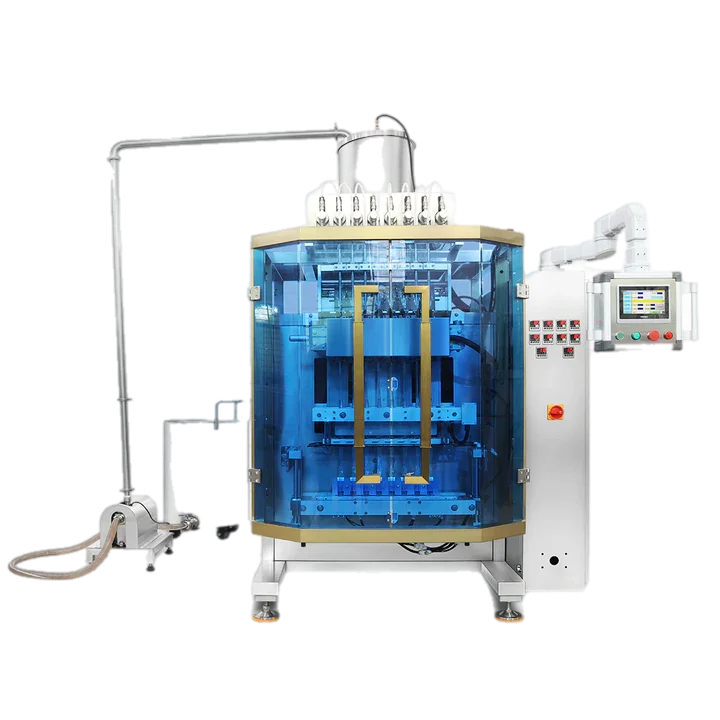
Shrinkwrapping Machinery

Shrinkwrapping machinery including chamber sealers, L sealers, sleeve sealers, heat tunnels and flow wrappers.

Shrinkwrapping machinery selection

Film handling, sealing and tunnel performance

Choosing shrinkwrapping equipment

Shrinkwrapping machinery should be selected from the pack size, film type, required finish, product stability and the available space around the infeed and outfeed. Chamber sealers, L-sealers, sleeve sealers, heat tunnels and flow wrappers each suit different product flows and operator requirements.

Film compatibility, seal integrity, tunnel dwell time, pack spacing and product heat sensitivity all need to be considered before choosing the machine format. Where packs vary in size, changeover access and repeatable settings are important for keeping output consistent.

Compare L-sealers, heat tunnels, sleeve sealers and flow wrappers. For full automation, the shrinkwrapper should also be checked against infeed and outfeed conveyors.

Provide pack and film samples

Pack dimensions, weight, stability, film type and preferred finish all influence the sealing and tunnel arrangement.

Common questions about shrinkwrapping machinery

Film, pack geometry, sealing and tunnel conditions all influence the finished bundle.

What causes loose shrink film after the tunnel?

Loose film can result from the wrong film orientation or shrink response, excess film, insufficient or uneven heat, unsuitable airflow, short dwell time, pack movement or an unstable seal. Evaluate the complete film path and bundle rather than raising temperature without diagnosis.

Why do shrinkwrapped packs distort?

Packs may distort when heat exposure, airflow, film force or conveyor support is unsuitable for the container or product. Lightweight bottles, heat-sensitive contents and irregular bundles need representative trials because a visually similar pack may respond differently.

How should shrink film be specified for a trial?

State film type, thickness, width, layflat or folded format, reel dimensions, shrink direction and supplier reference. Supply the production film and the full range of bundle configurations, including the least stable pack.

What determines the sustainable output of a shrinkwrapping line?

Sustainable output depends on product collation, film feed, sealing cycle, tunnel dwell, cooling, discharge and the ability to replenish film and clear faults. The wrapper and tunnel must be considered with the upstream product supply and downstream handling.