
Packaging line integration
Connect machines around controlled product flow, clear interface ownership and practical fault recovery.
Plan the application before selecting equipment
A packaging line is more than a row of individual machines. Each stage changes the spacing, condition or orientation of the pack, and the next stage can only perform consistently when that transfer is controlled.
Review the line during normal production, replenishment, changeover and a machine stop. Without accumulation or a defined stop strategy, a downstream pause can create back pressure, tipped containers or wasted product upstream.
Mechanical, electrical, control and safety interfaces need named ownership. Working heights, guide gaps, sensors, ready/fault signals, emergency-stop zones, reject handling and cleaning access should be agreed before positions are frozen.
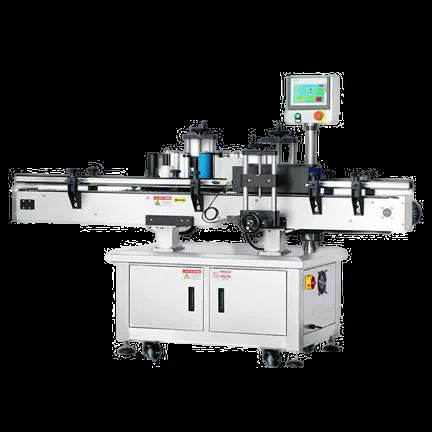
Information to prepare
- Scaled layout with operator and maintenance access
- Pack centreline and working heights
- Flow direction and accumulation locations
- Machine ready, run, fault and stop signals
- Emergency-stop and guarding boundaries
- Coding, inspection and reject requirements
- Replenishment routes
- Cleaning and changeover access
Review each interface
Use the real product, pack and site conditions when completing the review.
| Requirement area | What to confirm | Useful evidence |
|---|---|---|
| Infeed | Orientation, spacing, stability, sensor contrast and buffer. | Representative packs through a controlled start, stop and refill. |
| Filler to capper | Drip control, bottle stability, fill disturbance and timing. | Accepted packs through normal and stopped conditions. |
| Capper to labeller | Closure height, dry surface, rotation and spacing. | Finished bottles through the label datum. |
| Coding and inspection | Trigger, data, code area, verification and reject decision. | Signal list, failed-pack response and retained sample. |
| End of line | Accumulation, manual packing, case loading or shrinkwrap pace. | Blocked and starved-state test. |
| Controls and safety | Ready/fault states, restart permission and access interlocks. | Validated sequence and documented recovery method. |
Balance flow rather than nameplate speeds
A filler may index several containers at once while a capper runs continuously and a labeller needs a controlled gap. Accumulation should absorb normal variation without hiding a persistent constraint.
Design for recovery and changeover
Operators need a safe method to clear a misfed pack, isolate a machine, empty a conveyor and restart in sequence. Changeover instructions should cover shared datum points, guides, recipes and checks.
Define ownership at project boundaries
Where existing printers, inspection systems or third-party machines remain, record who supplies brackets, cabling, software changes, guarding modifications and validation.
Related planning routes
- Conveyors and accumulation — Review transfer equipment.
- Complete lines — Review multi-machine routes.
- Site preparation — Confirm footprint and services.
- Integration support — Include commissioning and handover.
Buyer questions
Practical points to settle before machinery is selected
What is accumulation used for?
It provides controlled buffer so short stops or cycle differences do not immediately stop the whole line. Its size and control method must suit pack stability and process risk.
Do all machines need network communications?
Not always. Simple ready, run and fault interfaces may be sufficient, while more complex lines may need recipe or production-data exchange.
When should the layout be frozen?
After flow, access, utilities, guarding, replenishment, maintenance and delivery routes have been reviewed.
Can existing machinery be integrated?
Often, but its condition, height, controls, speed range and safety boundaries need assessment before the new scope is fixed.
Prepare a machinery enquiry
Send the product, pack formats, current method, target result and site information so Lancing can review the most suitable next step.
Send project detailsHow should an automation upgrade fit an existing factory?
Start with the production step that limits accepted output, then map the machines and manual tasks around it. Record available space, working heights, utilities and access before comparing an upgrade. Define how products enter and leave the new equipment so a faster process does not simply move the queue downstream.
- Existing process constraint
- Transfers and working heights
- Utilities and service access
Related guidance: Integration support