
Powder and granule packaging machinery
Match dosing and pack handling to flow behaviour, dust, density variation, fragility and the final container or pouch.
Plan the application before selecting equipment
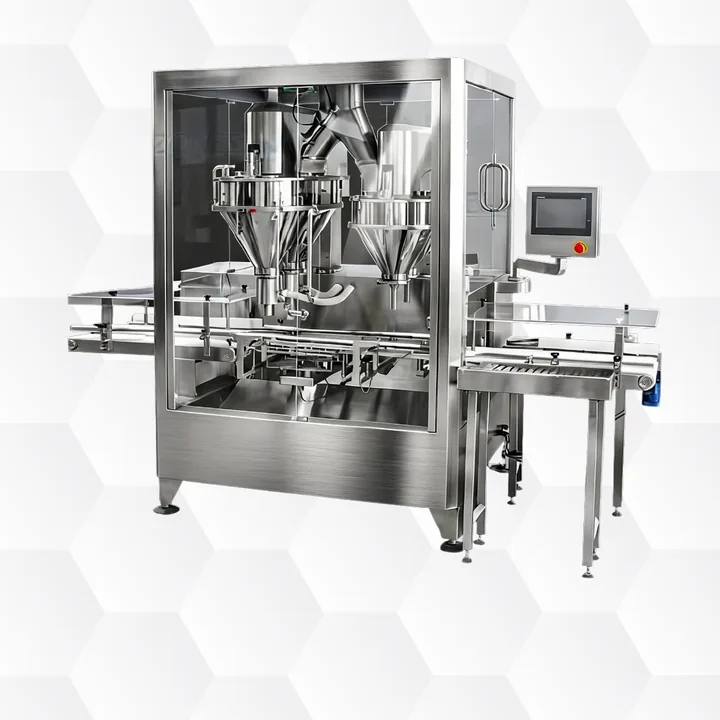
Powders and granules cannot be selected by weight range alone. Flowability, bulk density, particle size, dust, static, moisture sensitivity, bridging, compaction and fragility affect the hopper, feeder, dosing system and fall into the pack.
Common routes include auger, weigh, volumetric and vibratory systems. An auger can control many powders but may compact some products. Weighing responds to mass but feed and settling still affect cut-off. Vibratory systems can suit free-flowing granules where product movement is acceptable.
Pack format changes the downstream requirement. Bottles and jars need controlled neck entry and clean closures, while pouches and bags need headspace and a clean seal area.
Information to prepare
- Representative product from normal supply
- Bulk-density range where known
- Particle size, dust, bridging and fragility
- Target weight or volume range and test method
- Container, jar, pouch or bag samples
- Seal, cap, liner and label requirements
- Extraction and cleaning expectations
- Product-feed height and replenishment
Application decision matrix
Use the real product, pack and site conditions when completing the review.
| Process stage | Selection variables | Acceptance evidence |
|---|---|---|
| Product feed | Hopper loading, segregation, dust, bridging and refill effect. | Stable supply through a representative refill. |
| Dosing method | Auger, weigh, volumetric or vibratory response. | Measured samples using the agreed method. |
| Cut-off and fall | Fine/coarse feed, dribble, bounce, static and opening. | Consistent cut-off without excessive spill or damage. |
| Dust control | Enclosure, extraction, grounding, cleaning and contamination. | Accepted work area and clean pack surfaces. |
| Pack closure | Cap, liner, induction seal or heat-seal area. | Approved closure or seal check. |
| Changeover | Residual product, cross-contamination, tooling and recipes. | Documented clearing and first-off approval. |
Use a product trial to choose dosing
Descriptions such as powder or free-flowing are too broad. Trial the actual product across the range, including refill and end-of-batch conditions.
Keep closure or seal areas clean
Dust can interfere with threads, liners, labels and heat seals. Control fall path, extraction, pack position and settling time.
Plan safe cleaning and recovery
Hoppers, screws, pans, weigh buckets, chutes and extraction points need an agreed clearing and cleaning method.
Related planning routes
- Powder and granule fillers — Review auger and granule equipment.
- Weight filling — Review mass-based dosing.
- VFFS machinery — Review bag-forming systems.
- Induction sealing — Review liners after dusty filling.
Buyer questions
Practical points to settle before machinery is selected
Which filler is best for powder?
There is no single best method. Flow, density variation, dust, range, pack opening and cleanability determine the route.
Why does bulk density matter?
A volume of product can weigh differently when density changes, affecting volumetric dosing and feed behaviour.
Can fragile granules be vibrated?
It depends on the product and accepted damage level. A trial should inspect both dose and product condition.
How can dust in a pouch seal be reduced?
Control cut-off, drop, extraction, pouch position, settling and fill level, then verify with production film and product.
Prepare a machinery enquiry
Send the product, pack formats, current method, target result and site information so Lancing can review the most suitable next step.
Send project detailsInclude hopper replenishment in the dry-product trial
Provide the product in the condition it normally reaches production and explain how it is transferred into the dosing system. Record any known variation between batches. Ask the trial plan to include normal replenishment and the end of a batch, since these are part of the operating duty rather than exceptions outside the specification.
Follow the product beyond the dosing point. Check the pack opening, closure or seal area and the appearance of the finished pack. Keep dosing results separate from spill, dust and presentation observations so the proposal can address each issue directly.
- Material record
- Identify product batch, storage condition and any substitute used in testing.
- Run sequence
- Include startup, refill and final discharge conditions in the agreed sample assessment.
Can a nominal fill range identify the right powder machine?
It narrows the discussion, but actual product flow, dosing behaviour, pack opening and closure requirements must also be assessed.