
Food and beverage packaging machinery
Plan equipment around product behaviour, cleaning, pack integrity and the real production campaign.
Plan the application before selecting equipment
Food and beverage applications range from free-flowing drinks and oils to sauces, syrups, products with particulates, powders and granules. The filling principle must suit the product condition at the machine, including temperature, viscosity, foaming, settling, particle size and sensitivity to movement.
The container and closure need to protect the product while moving reliably through the line. Bottles, jars, tubs, cups, pouches and bags have different stability, sealing and labelling requirements. Wet or contaminated closure and label areas can create downstream faults.
Cleaning and changeover should reflect the actual recipe sequence and site procedure. Product-contact parts, hoppers, pumps, hoses, nozzles and spill areas need accessible inspection. Materials and cleaning methods must be confirmed for the selected machine.
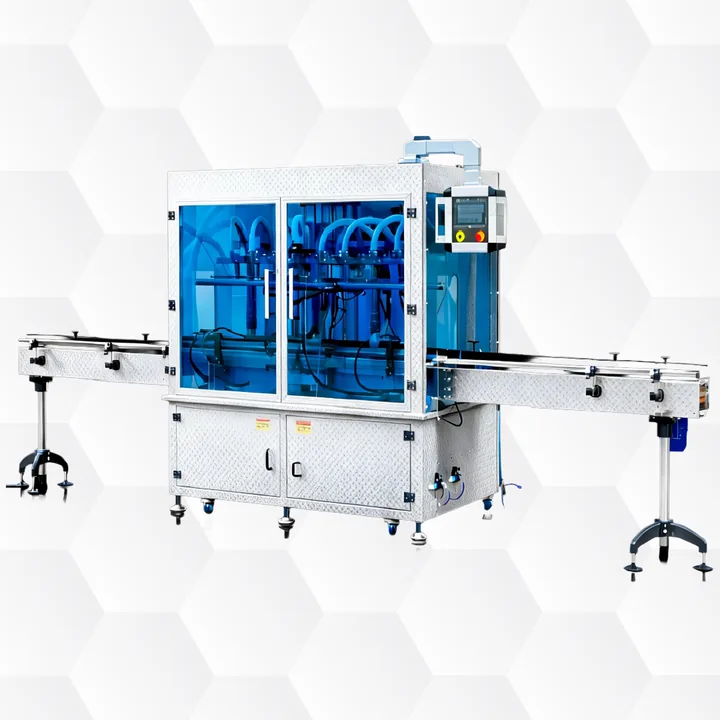
Information to prepare
- Product recipe and condition at filling
- Container, closure, liner, label or film samples
- Cleaning and changeover sequence
- Required fill, closure, seal and code checks
- Product-feed and temperature-control method
- Campaign length and recipe order
- Downstream case, shrinkwrap or manual packing route
Industry specification matrix
Use the real product, pack and site conditions when completing the review.
| Project area | Key considerations | Useful evidence |
|---|---|---|
| Product handling | Flow, foaming, particulates, settling, temperature and cleanability. | Production product and agreed trial condition. |
| Primary pack | Rigidity, opening, rim condition, headspace and stability. | Samples covering launch formats and normal variation. |
| Closure or seal | Cap, lid, liner, foil or heat-seal compatibility. | Approved components and customer check method. |
| Labelling and coding | Surface condition, condensation, label material and traceability data. | Production label rolls and code requirement. |
| Cleaning and changeover | Product removal, inspection, cleaning and recipe sequence. | Site procedure and accepted clean condition. |
| End of line | Cooling, accumulation, case loading, shrinkwrap and finished stability. | Outer-pack samples, layout and workflow. |
Important: Suitability must be confirmed for the actual product, packaging, cleaning method, site and applicable safety requirements.
Choose dosing from product behaviour
Pump, piston, gravity, vacuum, auger, weigh and vibratory methods solve different problems. A sample trial should reproduce production product condition and feed method, not only pack size.
Protect the closure and label area
Nozzle shut-off, fill height, support and controlled transfer help keep threads, rims and label panels clean. Assess the completed pack rather than the fill in isolation.
Plan recipe and format change
Record which products can follow one another, dedicated parts and how the first accepted pack is approved. Short campaigns may favour accessible semi-automatic equipment.
Related planning routes
- Filling machinery — Compare dosing routes.
- Capping machinery — Review closures.
- Sealing and packing — Review liners and bag seals.
- Bottle application — Plan the complete sequence.
Buyer questions
Practical points to settle before machinery is selected
Can one filler handle liquids and sauces?
Possibly, but viscosity, particulates, pump or valve design, nozzle, product feed and cleaning must be assessed with representative products.
What samples are needed?
Provide production product, containers, closures, labels or film and enough material to test critical formats and agreed cleaning or changeover conditions.
How is hygiene confirmed?
The customer defines required materials, cleaning procedure and inspection method. Suitability is confirmed for the specific machine and application.
Should capping and labelling be trialled too?
Yes where fill contamination, closure application, condensation or container handling could affect the finished pack.
Prepare a machinery enquiry
Send the product, pack formats, current method, target result and site information so Lancing can review the most suitable next step.
Send project details