
Rotary Infeed
Rotary infeed systems.
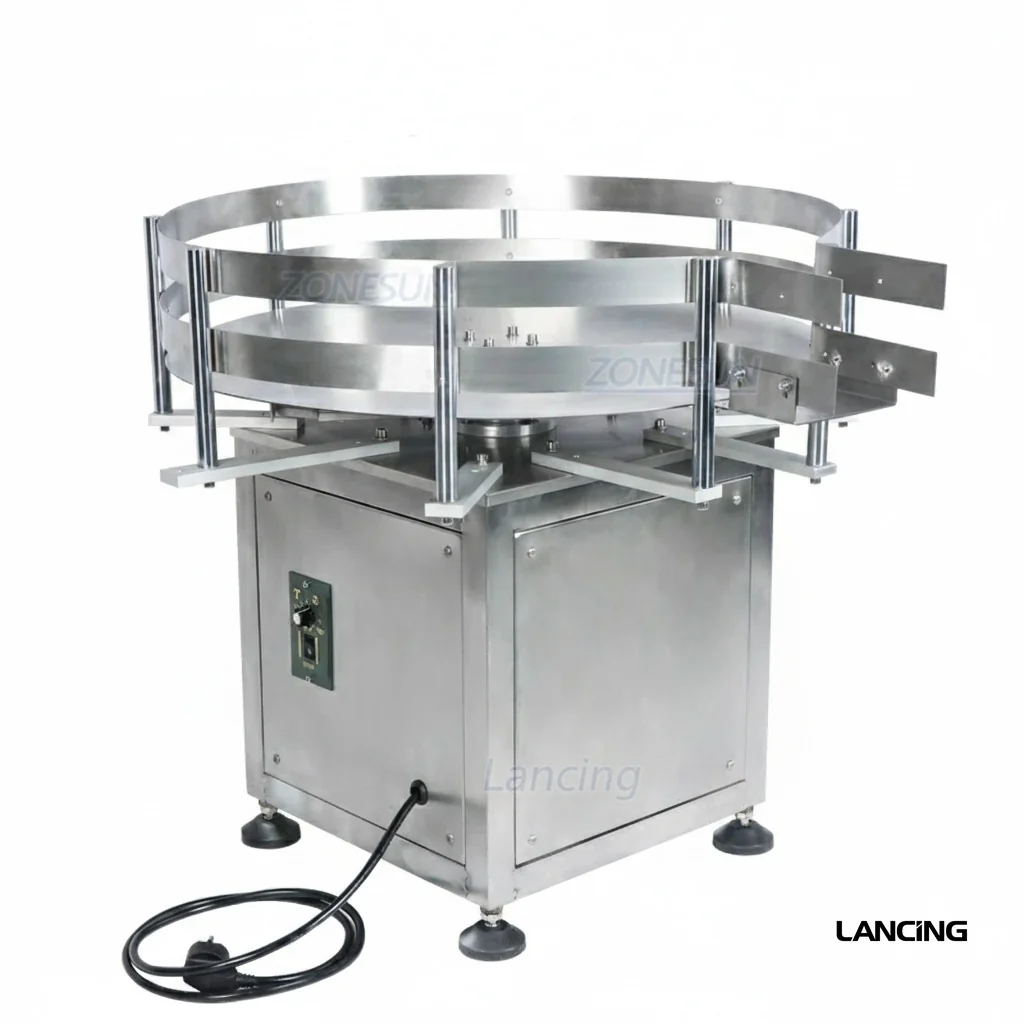
Choosing a rotary infeed for bottles and containers
A rotary table can buffer and present stable containers, but it is not a substitute for full bottle unscrambling or orientation where those functions are required.
Define what the infeed must do
A rotary infeed table receives containers and moves them towards a discharge point for a conveyor or machine. It may provide manual loading space, short accumulation and a controlled feed into the next process. The project should state whether containers arrive already upright, whether they require orientation and how much operator handling is acceptable. Containers supplied randomly in bulk may need a dedicated unscrambler rather than a simple rotary table.
The pack must remain stable while moving across the table and through the discharge guide. Base diameter, height, centre of gravity, flexibility, surface finish and tendency to nest or interlock all affect performance. Empty lightweight containers can behave differently from filled packs, so the correct stage of the process must be tested.
Match the feeder to the line interface
| Requirement | Rotary infeed consideration | Alternative to review |
|---|---|---|
| Manual loading of upright containers | Table diameter, operator reach, buffer capacity and controlled discharge. | Short belt or slatted conveyor where a table is unnecessary. |
| Random bulk bottles | A rotary table alone will not reliably stand and orient every format. | Automatic bottle unscrambler or bowl/centrifugal system. |
| Orientation to a handle, seam or panel | A repeatable feature and separate orientation method are required. | Sensor, camera, starwheel or dedicated orienter. |
| Buffer between machines | Check back pressure, release behaviour and container contact. | Accumulation conveyor or bi-directional table. |
Control speed and starvation without damaging containers
The infeed should be coordinated with the downstream machine so containers do not surge, jam or apply excessive pressure. The control review should cover low-container detection, downstream blocked conditions, manual refill, restart and emergency stops. Guides and discharge devices must be adjustable for the format range without creating traps or unstable transfers.
For bulk presentation and more complex formats, review bottle unscrambling, bottle feeding and rotary outfeed and collection.