
Chemical and household product packaging machinery
Review product compatibility, controlled transfer, closure security and site requirements before selecting equipment.
Plan the application before selecting equipment
Chemical and household products include detergents, cleaners, additives, oils and other technical liquids with different hazards and material-compatibility requirements. Start with current product information, including the safety data sheet where applicable, concentration, temperature, viscosity, foaming, vapour and cleaning characteristics.
Define the product path from storage or mixing vessel to the container. Pump, pipework, seals, valves, hose, nozzle and spill-control arrangements must be selected for the specific product and site; a generic material description is not enough to confirm compatibility.
Containers may range from small bottles to jerrycans with screw caps, triggers, pumps, vented closures or liners. Container stability, neck cleanliness, closure condition, dip-tube handling and finished-pack checks should be included.
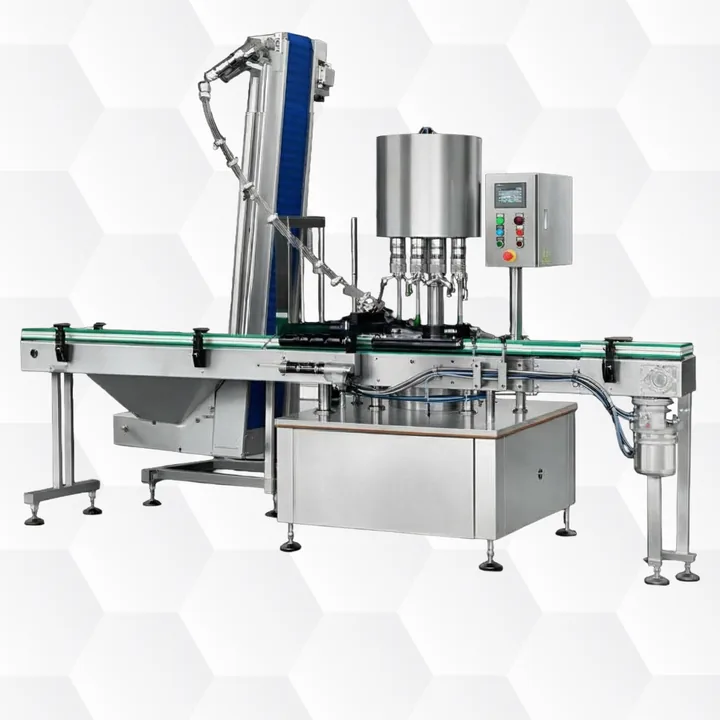
Information to prepare
- Current product and safety information
- Concentration, temperature and viscosity range
- Customer-approved compatible product-contact materials
- Container, closure, liner and label samples
- Product-feed and spill-containment method
- Ventilation, extraction or hazardous-area assessment
- Cleaning, flushing and waste procedure
- Finished-pack closure or leak check
Industry specification matrix
Use the real product, pack and site conditions when completing the review.
| Project area | Key considerations | Useful evidence |
|---|---|---|
| Compatibility | Chemical effect on seals, tubing, pumps, valves, metals and plastics. | Customer-approved compatibility information and product trial. |
| Transfer and filling | Supply vessel, pump, pressure, foaming, vapour, drip and support. | Process description, layout and product condition. |
| Closure | Screw cap, trigger, pump, vented closure, liner and tightening. | Approved components and finished-pack check. |
| Labelling and coding | Surface contamination, label adhesive, hazard information and code. | Production labels and clean/dry surface requirement. |
| Site controls | Ventilation, drainage, segregation, spill response and utilities. | Competent site assessment and agreed responsibilities. |
| Changeover | Flushing, product incompatibility, waste handling and inspection. | Written procedure and accepted clean condition. |
Important: Suitability must be confirmed for the actual product, packaging, cleaning method, site and applicable safety requirements.
Do not infer compatibility from appearance
Products with similar viscosity can affect seals, tubing and metals differently. The customer should provide information needed to approve materials.
Control the neck and closure area
Foam, drips and splashes can affect threads, liners, induction seals, labels and leak checks. Test fill height, shut-off and capping together.
Treat safety as project-specific
Hazardous substances, flammable atmospheres, corrosive exposure and extraction cannot be decided from a marketing category. A competent assessment is required.
Related planning routes
- ATEX filling — Review specialist routes where an assessment identifies a need.
- Trigger capping — Review sprayer closures.
- Bottle application — Plan fill, cap and label interfaces.
- Safety guide — Review responsibilities.
Buyer questions
Practical points to settle before machinery is selected
What product information is needed?
Provide current safety, composition or compatibility information, temperature, viscosity, concentration, container and closure, and the site handling method.
Can corrosive products use standard machinery?
A suitable configuration may exist, but product-contact materials, enclosure, pump, valves, hoses, nozzle, controls and site conditions must be assessed.
How are trigger closures handled?
They can be placed manually or automatically depending on geometry, dip tube, tangling, orientation and campaign pattern.
Should leak testing be included?
Where pack integrity is critical, define the approved check and whether it is manual, sampled or integrated.
Prepare a machinery enquiry
Send the product, pack formats, current method, target result and site information so Lancing can review the most suitable next step.
Send project details